
Hazardous Materials in Paper and Book Collections
Heavy metals have been used in the creation of books and manuscripts for thousands of years. In particular, nineteenth century books are known to contain pigments which are deemed hazardous. Arsenic, lead, chromium, and mercury were all in routine use in pigments and colorants during the period, and objects made with them are sitting in libraries, museums and private collections across the country.
This isn't a reason to panic about your collection. It's a reason to know what you have and to handle it appropriately.
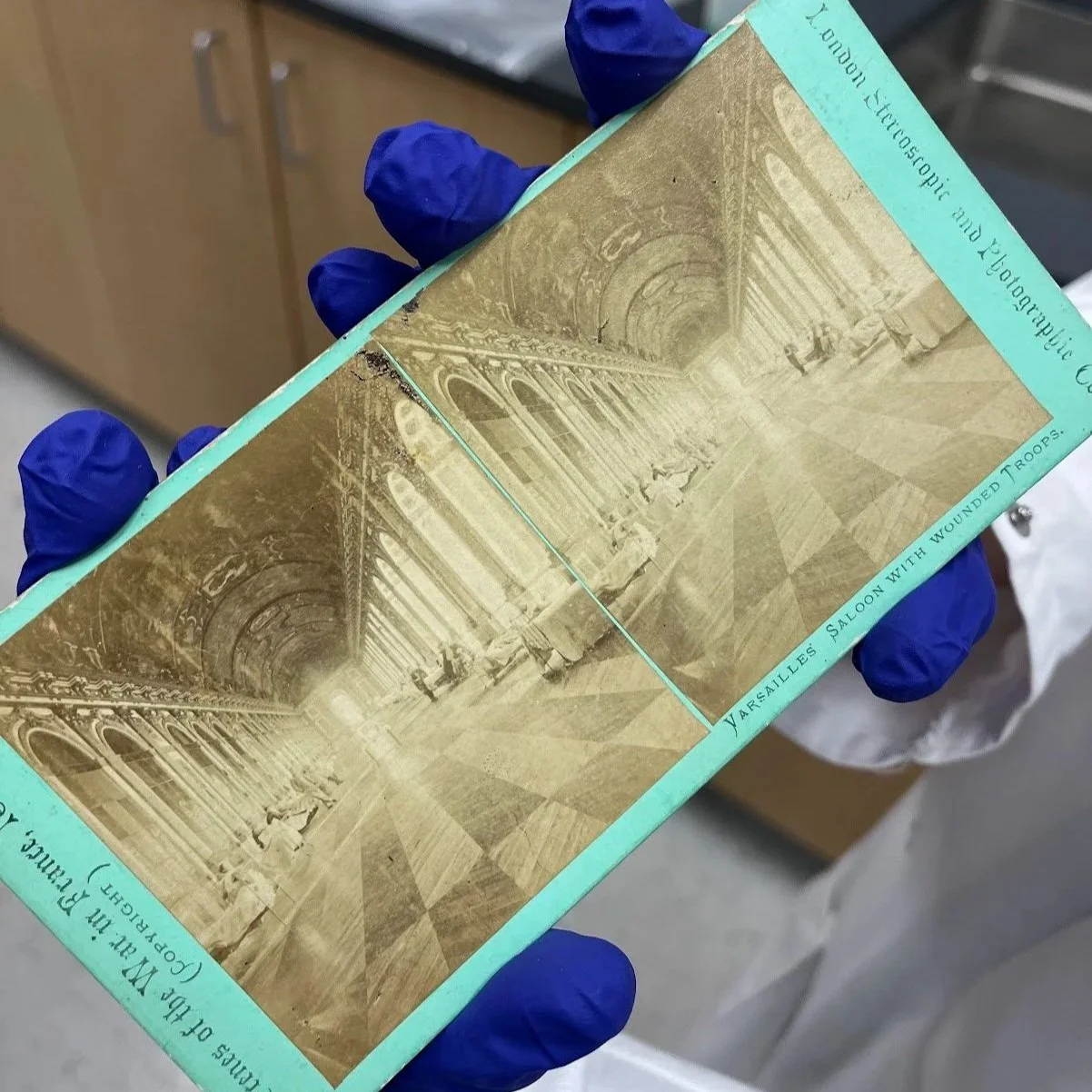
The likelihood of toxic pigments in your collection depends on several variables. For any books dating to the nineteenth century, there's a high likelihood that one of these metals is present:
Possible heavy metals in your collection
Arsenic: Copper arsenite and copper acetoarsenite, known variously as Scheele's green, emerald green and Paris green, produced a vivid green that was popular throughout the nineteenth century. It appears in bookcloth, wallpaper, printed labels, and hand-colored plates. The pigment can become friable with age, which means particles can transfer to hands, gloves, shelving and neighboring objects.
Lead: Lead white and chrome yellow, a lead chromate, were both in common use, and appear in paints, printing inks and hand-coloring.
Chromium: Present in chrome yellow and chrome green.
Mercury: Vermilion, a mercury sulfide, was a standard red pigment used well before the nineteenth century but continued throughout.
How to spot material that may be hazardous
Unfortunately, you cannot identify arsenic, chromium, lead or mercury in your collection by visual analysis. Knowing whether an object contains hazardous substances requires proper analysis.
If you think something in your collection is hazardous
Set it aside rather than continuing to circulate or exhibit it.
Don't clean, dust or vacuum it.
Handle it with nitrile gloves, and wash your hands afterward regardless.
Make a note of where it has been stored and what it has been sitting next to. Transfer to neighboring material is a documented concern.
Don't throw it out. These objects have real research and historical value, and they can be housed safely.
How we can help
We survey collections for materials likely to contain heavy metals, write handling protocols for your staff and your building, and recommend housing and storage that lets the material stay in the collection and stay accessible to researchers. We also run training sessions for collections, curatorial and reading room staff.
For institutions, this usually starts as a survey of a defined part of the collection, with a written report you can take to your director or use to support a grant application.
Research
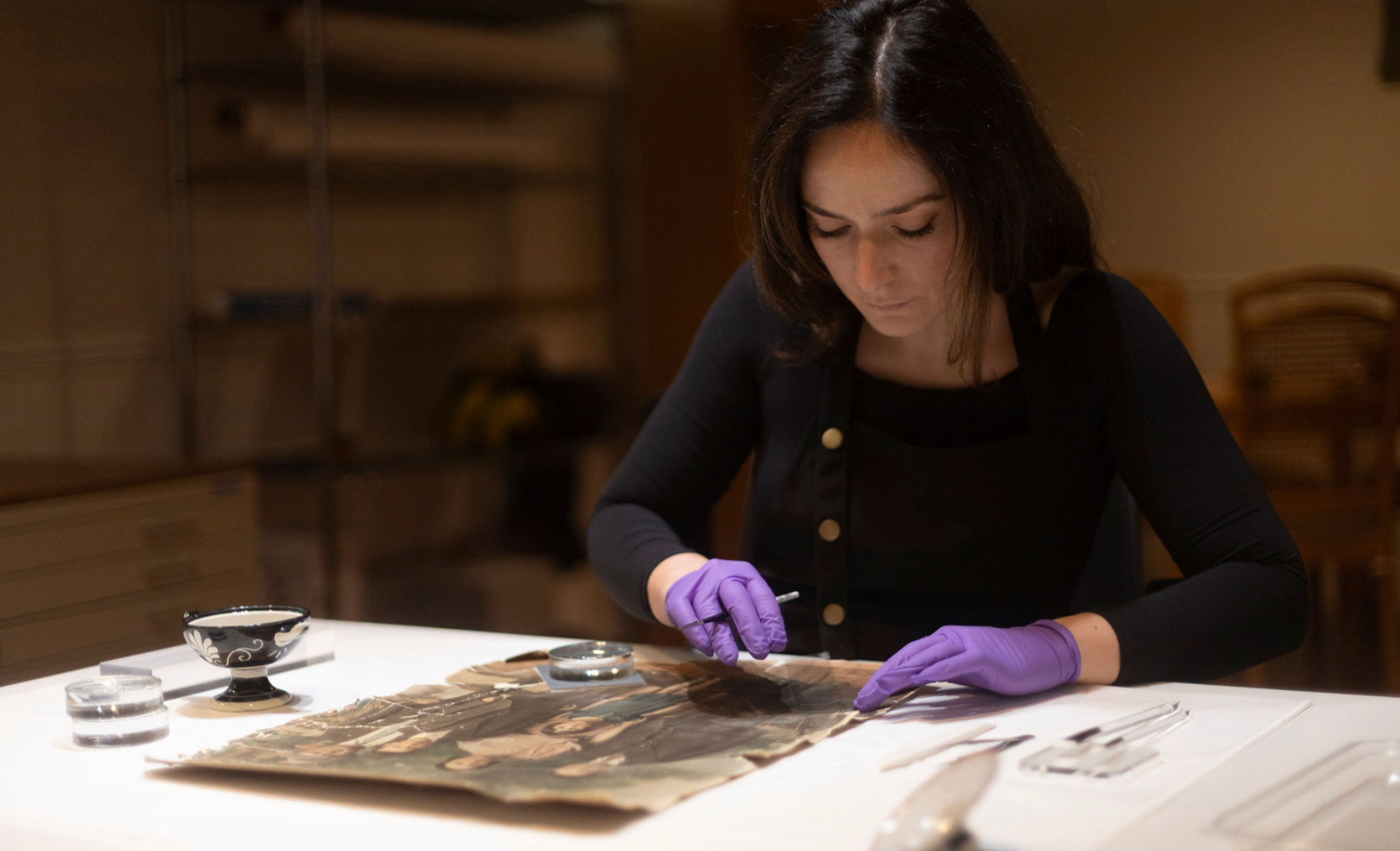
Lea Faoro is a conservator with extensive experience identifying and researching heavy metals in nineteenth century library collections. Her research spans not just detecting hazardous pigments used in period bookbinding, but also examining how these metals transfer to users and how contamination can be safely managed in working environments. She has co-authored recent scholarship on arsenical pigments identified at Northwestern University Libraries.
Common Questions
How would we know if we have anything hazardous without testing the whole collection?
1
Analysis is the only real way of knowing whether you have anything hazardous. Certain collections are more likely to contain hazardous pigments or materials. We can help narrow down what objects are at high risk of being hazardous and how to properly handle and house them.
Would we have to remove affected material from the collection?
2
Almost never. The point of an assessment is to keep the material accessible while making it safe to handle. In practice that usually means specific housing, a written handling protocol, and a note in the object record so staff and researchers know what they’re dealing with.
Is it safe for staff and researchers to handle these items in the meantime?
3
Until something has been assessed, use nitrile gloves, don’t clean or dust it, and wash hands afterward. If there’s material you’re actively worried about, set it aside rather than continuing to circulate it.
Can you train our staff instead of doing the work yourselves?
4
Yes, and for an institution with its own collections team that’s often the more useful engagement. Training covers handling, housing and what to escalate.
Surveys can range in size and scope. Cost is dependent upon the objective and scope of the collection.
5
What does a survey cost?
If your holdings include nineteenth century books, prints or hand-colored material and nobody has assessed them, that's worth changing before it becomes a staff safety question.